Uncertainty Isn't a Risk on Your Register Anymore — It's the Environment You're Operating In
Why most organizations don't have a strategy problem they have a delivery capability gap.
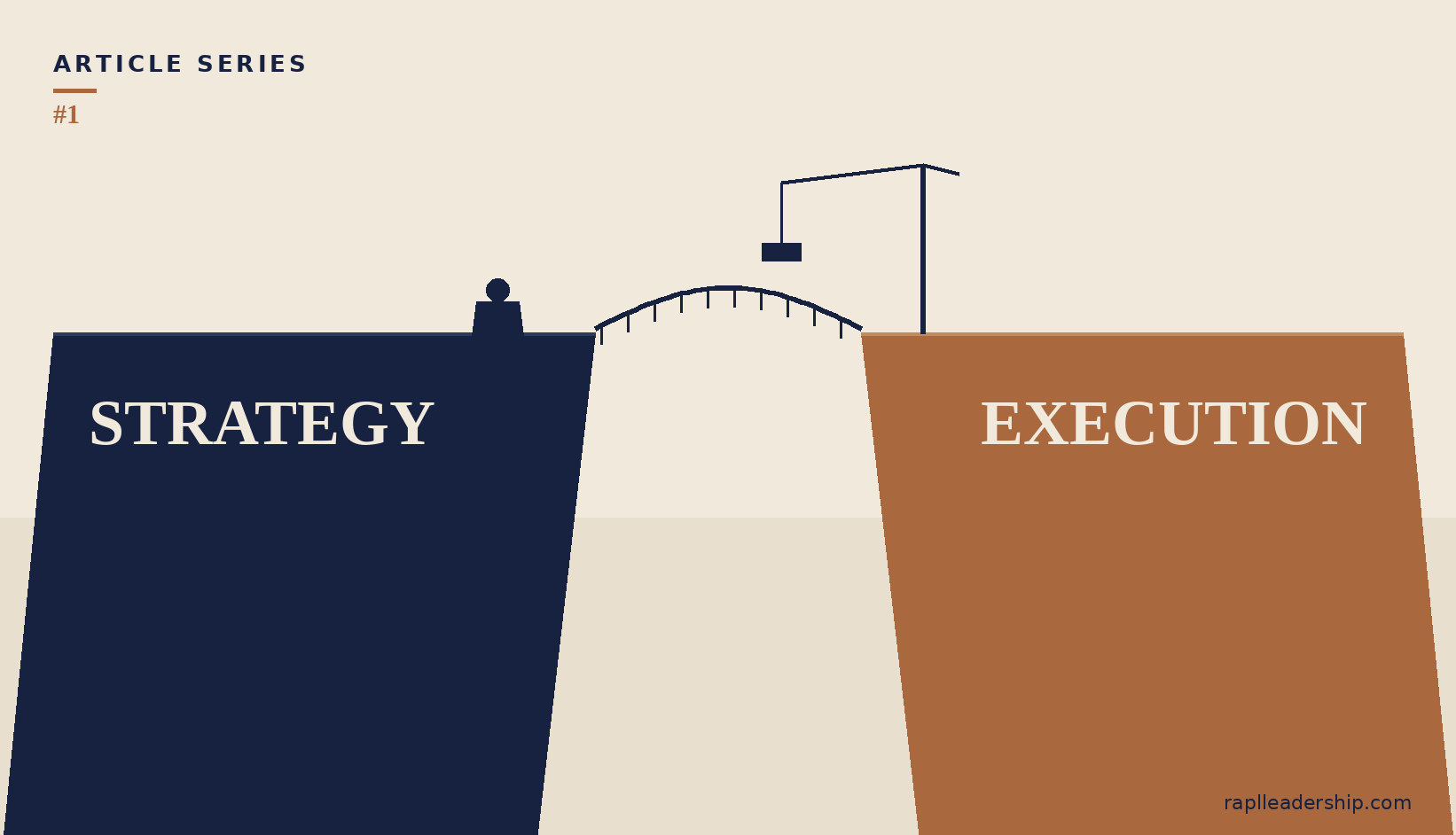
Why most organizations don't have a strategy problem. They have a delivery capability problem.
Boardrooms still love a clean strategy slide. An arrow starting at current state, sweeping confidently toward target state, with a few milestones dotted along the way. It looks decisive. It looks controlled.
It rarely matches what actually happens next.
Markets move faster than annual planning cycles can keep up with. AI is rewriting how work gets done before governance frameworks even notice the shift. Customer expectations reset almost daily. The old assumption stabilize first, then execute no longer holds. There is no stable to wait for. Movement is the baseline condition now, not the exception.
And yet strategy keeps getting approved as if the ground will hold still long enough to deliver it.
The real gap isn't vision. It's execution capability.
When transformation efforts stall or quietly fail, the instinct is to blame the strategy. Wrong market read. Wrong timing. Wrong bet. But look closer at most failed initiatives and the strategy was rarely the problem. What was missing was the organizational muscle to actually carry it out.
Execution isn't a mindset or a motivational push. It's a capability one that has to be deliberately built, systematically developed and governed with real discipline. Organizations that treat just execute better as a pep talk instead of a capability-building exercise are the ones that keep landing in the same place: a strategy full of intent and a delivery track record that can't back it up.
This is precisely the gap a structured leadership and delivery framework is built to close turning execution from a vague expectation into something that can actually be taught, measured and repeated.
Certifications aren't the point. Capability architecture is.
Frameworks like PMI's certification system are often mistaken for a checklist of professional badges. Looked at properly, they're something more structural: a layered system connecting strategy, people, process, technology and governance into a single operating language for delivery.
PMP-level credentials build the base layer the discipline to move complex work forward through ambiguity, competing demands and constant change.
Program and portfolio-level credentials extend that discipline upward, so every initiative in a portfolio pulls toward the same strategic direction instead of competing for attention.
Specialist tracks agile practice, risk management, business analysis sharpen the specific judgment calls delivery depends on day to day.
PMO-focused credentials develop the people who actually build and run the offices that govern all of this.
AI-focused credentials extend the same structured discipline into AI-driven initiatives, which is quickly becoming its own delivery category.
Stacked together, these don't describe a certification catalog. They describe how an organization actually moves from ambition to outcome when the environment refuses to sit still which is the same problem RAPL's own leadership framework and certification pathway are designed to solve at the individual and organizational level.
The job itself has changed
Managerial work today isn't really administering tasks anymore. It's navigating ambiguity in real time:
Making progress without complete information
Aligning stakeholders who want fundamentally different things
Delivering value while requirements are still shifting underneath them
Holding a team's confidence together in conditions that offer very little certainty to hold onto
That's not a small shift in job description. It's a different job entirely and most organizations have never formally built the capability to do it well. They've just kept promoting people into it and hoping instinct fills the gap.
What happens when the capability is missing
The symptoms are familiar to almost anyone who's sat through a transformation program:
Portfolios turn into wish lists instead of prioritized commitments
Programs launch with fanfare and quietly lose momentum within a quarter
Projects deliver outputs that no longer match what was actually needed
Risk registers become paperwork theater rather than active decision tools
Capable people burn out trying to reconcile priorities that leadership never actually resolved
What changes when it's built deliberately
When delivery capability is treated as seriously as strategy, the pattern flips:
Strategy becomes a managed flow of initiatives, not a static slide deck
Prioritization becomes transparent and criteria-driven instead of political
Governance becomes a genuine escalation path for value, risk and trade-offs not just another status meeting on the calendar
Leadership can honestly answer the question that actually matters: are we set up to deliver this, or just hoping we are?
Why this matters more now than ever
Nearly everything on the near-term horizon new operating models, AI-enabled delivery, sustainability programs, customer experience redesigns, regulatory change, enterprise modernization will be carried through projects and programs, not press releases. Every one of them depends on people who can move complex work from idea to outcome. And every one of them will live or die in the gap between the PowerPoint version and the operational reality.
The organizations that come out ahead won't be the ones with the boldest strategy decks. They'll be the ones that quietly built the capability to actually deliver what those decks promised.
If you're accountable for a portfolio, a transformation or an initiative that genuinely cannot be allowed to fail, it's worth asking plainly: is this a strategy conversation or is it a delivery capability problem wearing a strategy costume?
RAPL Leadership works with individuals and organizations to answer exactly that question starting with a practical delivery capability diagnostic that shows you where the gap actually sits before you invest in closing it. You can also explore the research behind this approach and browse further resources on building execution capability at scale.
FAQs
What's the difference between a strategy problem and a delivery capability problem?
A strategy problem means the direction itself is wrong. A delivery capability problem means the direction is sound, but the organization lacks the structured discipline people, process, governance to actually carry it out. Most failed transformations are the second kind, mistaken for the first.
Why is execution considered a capability rather than just a mindset?
Because it can be deliberately built, measured and improved the same way any other organizational competency can. Treating it as a matter of willpower or motivation is exactly why so many organizations never actually close the gap.
How do frameworks like PMI's certification system fit into building this capability?
They provide a shared language and a layered structure — from individual project discipline up through program, portfolio and PMO-level governance that connects strategy to execution across every level of an organization, rather than leaving delivery to individual heroics.
How can an organization find out if it has a delivery capability gap?
The clearest starting point is a structured diagnostic rather than a guess. RAPL Leadership's delivery capability diagnostic is built specifically to surface where the gap sits strategy, governance or execution before committing resources to fix it.
Who should be asking this question inside an organization?
Anyone accountable for a portfolio, transformation program or initiative where failure isn't an acceptable outcome from PMO leaders and program directors to senior executives sponsoring the work.
Learn more about building delivery capability at raplleadership.com or read more about the approach on the About page.